In Hatha yoga, breath is not an afterthought — it is the very foundation of practice. Before we move into asanas, before we attempt stillness in meditation, we must first learn to breathe with full awareness. This is the essence of Pranic breathing.
Why Pranic Breathing Matters in Hatha Yoga
Hatha yoga literally translates as the union of “ha” (sun) and “tha” (moon) — two opposing energies brought into balance. Pranic breathing is how we achieve this balance internally. When we breathe unconsciously, our energy scatters and the body moves through asanas mechanically. When we breathe with intention, we gather prana and direct it through the body’s energy channels (nadis), making every posture richer and more effective.
The Technique
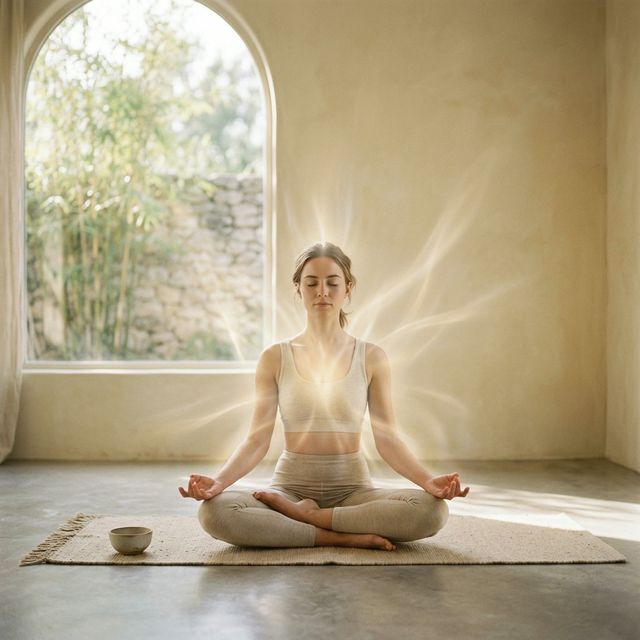
- Preparation: Sit in Sukhasana or Vajrasana with your spine erect and shoulders relaxed. This upright posture — fundamental in Hatha yoga — allows the breath to move freely through the full length of the torso.
- Inhalation: Breathe in slowly through the nostrils for a count of 4, allowing the abdomen to expand first, then the chest. This diaphragmatic breath is the basis of all traditional yoga breathing and the starting point for every pranayama practice.
- Retention (Kumbhaka): Gently hold the breath for a count of 2. In this moment of stillness, prana is absorbed and distributed throughout the body. Traditional Hatha yoga texts describe this retention as the point where the mind becomes naturally quiet.
- Exhalation: Release slowly for a count of 6, drawing the navel back toward the spine to empty the lungs fully and completely.
Practiced regularly, this breathing pattern becomes the anchor of your Hatha yoga sessions — regulating the nervous system, improving lung capacity, and cultivating the inner calm that makes deep posture work possible. Join us at our Bangalore studio to integrate pranayama into your daily practice.